
CONCLUSION
|
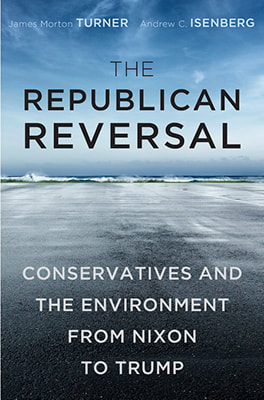
Primary Sources
2002
2010
2017
“...MAKING THE MONUMENT A REALITY REQUIRED HARD AND LONG WORK BY A LARGE NUMBER OF INDIAN PEOPLE...”
“EVEN IF THE PARIS AGREEMENT WERE IMPLEMENTED IN FULL, WITH TOTAL COMPLIANCE FROM ALL NATIONS, IT IS ESTIMATED IT WOULD ONLY PRODUCE A TWO-TENTHS OF ONE DEGREE — THINK OF THAT; THIS MUCH — CELSIUS REDUCTION IN GLOBAL TEMPERATURE BY THE YEAR 2100. TINY, TINY AMOUNT” - TRUMP MIT News: MIT Issues Statement Regarding Research on Paris Agreement
In response to President Trump’s reference to MIT research in support of his withdrawal from the Paris Climate Accord, MIT set the record straight. “...THE PARIS AGREEMENT IS AN UNPRECEDENTED AND VITAL EFFORT BY NEARLY 200 COUNTRIES TO RESPOND TO THE URGENT THREAT OF GLOBAL CLIMATE CHANGE” - MIT NEWS OFFICE 2018
|



Discussion Questions
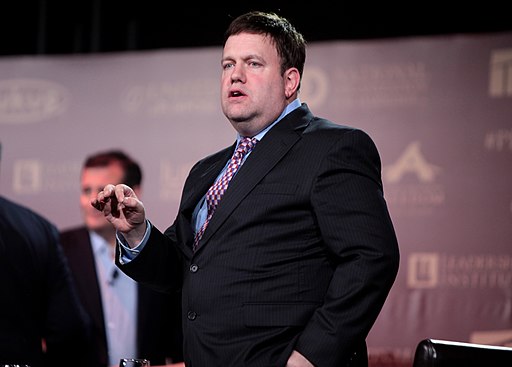
- Why did Frank Luntz think that Republican candidates might be vulnerable on environmental issues in the 2002 midterm elections? How did Luntz’s 2002 advice to Republicans affect their strategy on environmental issues?
- To what extent did Trump follow Luntz’s advice in his 2016 presidential campaign?
- How has the Republican reversal evolved since the 1980’s?
- What role does science play in environmental politics? What are “tornado” politics? How do they differ from “abortion” politics? What examples from the book illustrate these issues?
- In what venues have environmentalists been most successful in fending off the Republican reversal for American environmental policy? What have been the lasting consequences of the Republican reversal?
Additional Readings
Science and Environmental Politics
The Republican War on Science
Chris Mooney | New York: Basic Books, 2005
“Forests, Tornadoes, and Abortion: Thinking about Science. Politics, and Policy”
Roger A. Pielke. Jr. | Forest Futures: Science, Politics, and Policy for the Next Century, Lanham, MD: Rowman & Littlefield, 2004
The Honest Broker: Making Sense of Science in Policy and Politics
Roger A. Pielke. Jr. | Cambridge: Cambridge University Press, 2007
Chris Mooney | New York: Basic Books, 2005
“Forests, Tornadoes, and Abortion: Thinking about Science. Politics, and Policy”
Roger A. Pielke. Jr. | Forest Futures: Science, Politics, and Policy for the Next Century, Lanham, MD: Rowman & Littlefield, 2004
The Honest Broker: Making Sense of Science in Policy and Politics
Roger A. Pielke. Jr. | Cambridge: Cambridge University Press, 2007
U.S. Environmental Policymaking
American Environmental Policy: Beyond Gridlock (updated and expanded ed.)
Christopher M. Klyza and David J. Sousa | Cambridge, MA: MIT Press, 2013
Open for Business
Judith Layzer | Cambridge, MA: MIT Press, 2012
Christopher M. Klyza and David J. Sousa | Cambridge, MA: MIT Press, 2013
Open for Business
Judith Layzer | Cambridge, MA: MIT Press, 2012
Trump Administration's Environmental Record
”Why Has the E.P.A. Shifted on Toxic Chemicals? An Industry Insider Helps Call the Shots”
Eric Lipton | The New York Times, 21 October 2017
“Oil Was Central to Decision to Shrink Bears Ears Monument, Emails Show”
Eric Lipton and Lisa Friedman | The New York Times, 2 March 2018
”One Big Legal Obstacle Keeps Trump from Undoing Greenhouse Gas Regulation”
John McQuaid | Scientific American, 26 April 2017
The EPA Under Siege
Chris Sellers et al. | Environmental Data and Governance Initiative, 19 June 2017
Environmental Data and Governance Initiative
An excellent resource on the consequences of Trump administration’s environmental policy agenda for environmental policy, data, scientists, and other policymakers.
“’Whither We Are Tending’: Interrogating the Retrenchment Narrative in U.S. Environmental Policy”
David J. Sousa and Christopher M. Klyza | Political Science Quarterly, September 2017
Eric Lipton | The New York Times, 21 October 2017
“Oil Was Central to Decision to Shrink Bears Ears Monument, Emails Show”
Eric Lipton and Lisa Friedman | The New York Times, 2 March 2018
”One Big Legal Obstacle Keeps Trump from Undoing Greenhouse Gas Regulation”
John McQuaid | Scientific American, 26 April 2017
The EPA Under Siege
Chris Sellers et al. | Environmental Data and Governance Initiative, 19 June 2017
Environmental Data and Governance Initiative
An excellent resource on the consequences of Trump administration’s environmental policy agenda for environmental policy, data, scientists, and other policymakers.
“’Whither We Are Tending’: Interrogating the Retrenchment Narrative in U.S. Environmental Policy”
David J. Sousa and Christopher M. Klyza | Political Science Quarterly, September 2017